
Magic Number Subnetting
Magic Number Subnetting - The first step is to calculate the magic number. Magic table for quick subnetting class c and reference for a and b. The method from this post introduces a cidr boundaries concept that produces the same results by subtracting the cidr value of the mask from the higher boundary of the interesting octet. 128, 64, 32, 16, 8, 4, 2, 1. It's almost like a shortcut for subnetting. Also , steps for doing vlsm.
In other words if i have an ip address of 192.168.3.3 and a subnet mask of 255.255.240.0 i will end up with an interesting octet value of 16. Make change noting /31 usage in ccna exam may not be recommended; Let's say you have a class b network of 172.16.0.0/16, and borrow 3 bits to make it a /19. Welcome to r/magicmushroomsuk, sourcing, attempting to source is strictly prohibited. So for /23 mask the block size of this subnet is 2 and the subnet number will be multiples of 2.
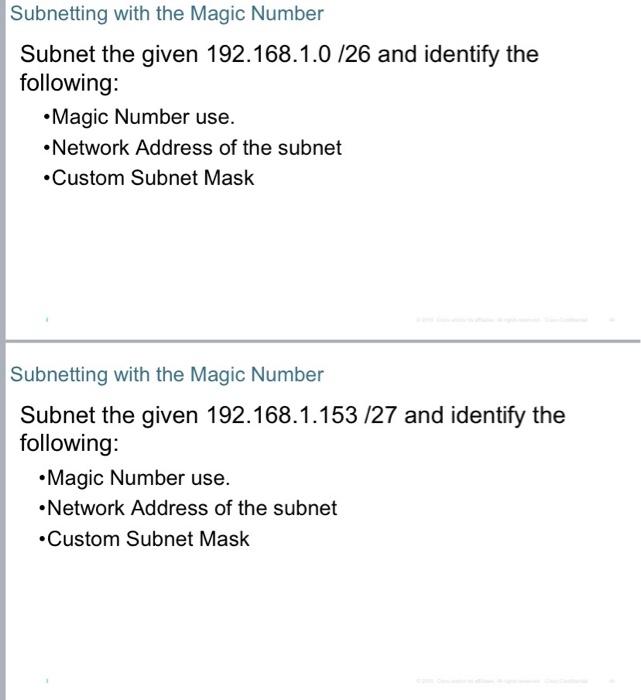
Solved with the Magic Number the given
The magic number in subnetting refers to the block size of the subnets (also called the increment). The method from this post introduces a cidr boundaries concept that produces the same results by subtracting the cidr value of the mask from the higher boundary of the interesting octet. There are 3 subnetting methods that i know of: Let's say you.

How To Find Magic Number fasrtank
This is not fully accurate because the subnet specific addresses (like network and broadcast addresses, for example) will decrease the number of available host addresses. It's almost like a shortcut for subnetting. The method from this post introduces a cidr boundaries concept that produces the same results by subtracting the cidr value of the mask from the higher boundary of.

How to find magic number ucpasa
Let's say you have a class b network of 172.16.0.0/16, and borrow 3 bits to make it a /19. Look for the interesting octet in the mask area. Write the result in the area noted “magic # =>”. In other words if i have an ip address of 192.168.3.3 and a subnet mask of 255.255.240.0 i will end up with.

How to find magic number faceopm
Look for the interesting octet in the mask area. The method from this post introduces a cidr boundaries concept that produces the same results by subtracting the cidr value of the mask from the higher boundary of the interesting octet. Rather then use no hosts for /31 There are 3 subnetting methods that i know of: The first step is.

with the Magic Number ttN
Also , steps for doing vlsm. The magic number in subnetting refers to the block size of the subnets (also called the increment). Make change noting /31 usage in ccna exam may not be recommended; There are 3 subnetting methods that i know of: Magic table for quick subnetting class c and reference for a and b.
Magic Number Subnetting - This is not fully accurate because the subnet specific addresses (like network and broadcast addresses, for example) will decrease the number of available host addresses. Magic table for quick subnetting class c and reference for a and b. The decimal value for the subnet mask basically increases by adding powers of two in the reverse order, as follows: Rather then use no hosts for /31 It's almost like a shortcut for subnetting. To find the magic number, simply subtract the number 256 from the interesting octet in the mask.
The interesting octet is the one that is different from 0 or 255. In other words if i have an ip address of 192.168.3.3 and a subnet mask of 255.255.240.0 i will end up with an interesting octet value of 16. The method from this post introduces a cidr boundaries concept that produces the same results by subtracting the cidr value of the mask from the higher boundary of the interesting octet. For example these are the addresses of /23 mask subnet: Write the result in the area noted “magic # =>”.
It's Almost Like A Shortcut For Subnetting.
The first step is to calculate the magic number. There's nothing magic about it, but it has many uses. Rather then use no hosts for /31 The decimal value for the subnet mask basically increases by adding powers of two in the reverse order, as follows:
The Magic Number In Subnetting Refers To The Block Size Of The Subnets (Also Called The Increment).
To find the magic number, simply subtract the number 256 from the interesting octet in the mask. The method from this post introduces a cidr boundaries concept that produces the same results by subtracting the cidr value of the mask from the higher boundary of the interesting octet. This tutorial has helped me a lot and makes sense when subnetting with numbers that are defined beyond the magic number, but what about numbers lower than the magic number. With the magic number method, you subtract the interesting octet in the mask from 256.
Powers Of 2, Binary (Boolean And) And The Magic Number Method.
Magic table for quick subnetting class c and reference for a and b. In other words if i have an ip address of 192.168.3.3 and a subnet mask of 255.255.240.0 i will end up with an interesting octet value of 16. I will post 4 series: There are 3 subnetting methods that i know of:
Also , Steps For Doing Vlsm.
For example these are the addresses of /23 mask subnet: Let's say you have a class b network of 172.16.0.0/16, and borrow 3 bits to make it a /19. Look for the interesting octet in the mask area. It's best explained with an example: